
Nosodromosia - the economics of getting lost in a hospital in the UK

Every hospital knows the cost of running a clinic. But how many know the cost of patients getting lost trying to find it?
In large, complex hospitals, wayfinding is more than an inconvenience. A patient arrives late, stressed and struggling to focus. A consultation starts behind schedule. Appointment times slip. Staff leave their posts to give directions. Some patients never reach the room in time and are recorded as a non-attendance or sent to rebook.
We have coined a term for this largely invisible problem: nosodromosia, the disorientation and distress of becoming lost inside a hospital. Put simply, it is lost capacity that should be addressed. Its impact is easy to overlook because it rarely appears as a line on a balance sheet. Yet across a hospital, those small delays accumulate into lost clinical time, disrupted workflows
and avoidable pressure on both patients and staff.
The national figures capture only the sharpest edge of the problem:
8.1 million outpatient appointments were missed across NHS England in the year to March 2025. (DHSC, Written Answer to Parliament, 23 June 2025)
Each missed appointment represents around £160 of clinical capacity, measured at NHS reference cost. (NHS England reference cost; National Cost Collection 2023/24; Esendex FOI analysis, June 2025)
Nationally, missed appointments are estimated to cost the NHS around £1.2bn a year. (NHS England estimate)
Staff time is a hidden cost. A 2025 survey found hospital staff spend around 30 minutes a week each giving directions to lost visitors, which across a large workforce is thousands of clinical and administrative hours diverted from care every year. (Jamshidi et al., Sage, 2025)
A missed appointment is capacity the hospital has already paid for but cannot use. Reduce those losses and the benefits flow quickly: more patients seen, shorter waiting lists and, in many systems, more income. This is capacity that can be recovered without adding beds, buildings or clinical staff. At a time when hospitals are under intense pressure to increase elective activity, helping more patients reach the right place at the right time may be one of the simplest and lowest-cost gains available.
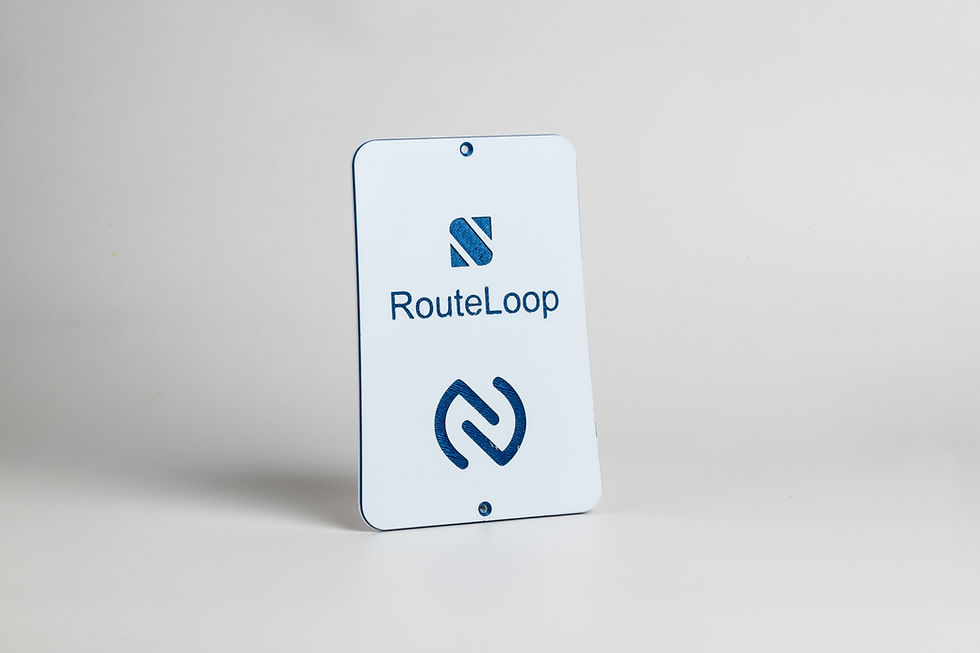
RouteLoop, designed by Superspree – in consultation with patient groups – is the first NHS digital wayfinding system of its kind, and is currently being piloted at a major NHS trust on the south coast of England. The routes can be adapted to different mobility needs, and the routes update automatically when the building changes. The pilot is already generating the operational picture a hospital management team would want: which routes
patients request, where journeys stall, and how much staff time goes on giving directions.
The early patient response is telling. People who once arrived late and anxious describe walking straight to the right place, one recalling that she no longer arrives with the raised blood pressure that finding her way used to cause.
Nosodromosia is not a patient problem. It is a design failure for hospitals, and it carries a measurable cost in capacity and access. For trusts and management teams, the question is no longer whether the problem is real. It is how quickly they can get started with addressing it.


Comments